The Top 20 Leadership Challenges

Leadership is like a constantly changing game. To be successful a leader must take into account factors such as personalities, environment, politics, demographics and trends. This is especially true for a leaders who wants to stay strong over time as they promote up through an organization.

The Center for Creative Leadership was founded to study effective strategies and tactics for leaderships in a scientific approach. A decade ago, I had the opportunity to attend their weeklong signature Leadership Development Program. It gave me valuable insights into my leadership style that have stayed with me to this day.

Recently, they released an article on their website titled The Top 20 Leadership Challenges. The article broke down leadership across four levels: frontline, middle, senior, and executive. Five challenges were identified for each level. At the frontline level, the first challenge was around frustrations with people and time.

Many frontline managers reported that their top leadership issue is feeling overwhelmed with inefficiencies and frustrated with others. This includes challenges with offering guidance to direct reports, overcoming resistance to change, dealing with difficult employees, and adjusting communication and feedback styles to collaborate more effectively with different people. And again, this appears to have become an even bigger concern for leaders at this level since the pandemic.

Moving up to the middle manager level, the first challenge had to do with personal limitations.

A top challenge for leaders at this level is their own personal limitations and feelings of inadequacy, as they often must overcome their own doubts about their abilities and readiness to lead — as well as the doubts of their peers or supervisors. Dealing with the challenge of personal limitations requires overcoming impostor syndrome, humility to seek the input of others, courage to do the right thing, and projecting confidence while communicating effectively.

Since the pandemic, mid-level managers have reported this as an issue even more frequently. With new cultures brought on by remote and hybrid workplaces, overcoming common limitations in order to make an impact as a leader has become even more challenging.

To learn about the other 18 leadership challenges, please read the entire article on the Center for Creative Leadership’s website.

The “Didn’t Know” Rule

Have you ever opened up a drawer and marveled at the discovery of something you didn’t even know you owned?

Given how much stuff we accumulate it is easy to pick up items without consciously remembering it! For me this happens at a conference when vendors hand out bookmarks, pens, and other items like candy at Halloween. While it is easy to acquire stuff, for most of us the challenge is getting rid of things we don’t want anymore.

The Minimalists have a simple approach to clearing out unneeded belongings. It’s called the “Didn’t Know” rule. Basically, it means that if you find something you didn’t know you owned, you can permit yourself to let it go. 

Barbara Bellesi Zito writing for the website Apartment Therapy, experimented with this approach. She tried it out on three boxes and soon discovered a surprise.

Taking up an entire box was a pile of TilePix I had purchased around three years ago when I snagged a sale. These photos from my phone didn’t render well at all, so I had no desire to hang them in our home. They went right into the garbage pile; I have the originals on my phone anyway, and I had completely forgotten I even had these in storage.

After completing the task of organizing the boxes, she wrote down three insights.

  • If you don’t know you have something, you can’t truly be missing it.
  • If it’s sentimental or something you need to hold on to, by all means, keep it.
  • Unless the storage in question holds seasonal clothing or items, check on it every few months or so to make sure you still want what’s in it.

I challenge you to take 10 minutes in the next 24 hours to practice this simple decluttering technique. For me, I’m eyeing that middle desk draw. I know it has long forgotten stuff waiting to be rediscovered …

Preparing for a Speech

There is an old joke based on the idea that people are more afraid of public speaking than they are of dying. Therefore, at a funeral they would rather be in the coffin than delivering the eulogy!

In all seriousness, public speaking gives many people anxiety. Thankfully there are ways to overcome a fear of speaking in public. One way is knowing how to prepare for a speech.

Prepared speeches happen when a person has time to get organized before speaking, whether it be an hour, a day, or a week. This preparation time can be very useful to ensure a successful speech. Toastmasters International has wonderful resources to help people become better speakers, including tips on preparing for a speech. One key suggestion is to get plenty of intentional practice:

Practice and rehearse a speech frequently prior to delivering it. Ask friends to be your audience, or practice in front of a mirror. Be sure to use a timer to help you pace your speech.

Photo by ICSA on Pexels.com

Another tip for prepared speeches is knowing the environment where it will be delivered. If at all possible, it is suggested to visit the site and practice in the environment.

Become familiar with the stage or the setting where the speech will take place. Get a sense of the size of the stage, where any steps or obstacles might be, and where to enter and exit.

Find more great tips on the prepared speeches and all types of public speaking, please visit the Toastmasters International website.

David Allen – Principles that Make Teams Work

How do highly productive teams come about? Are there underlying ideas that make them successful?

In their new book, Team, David Allen and cowriter Edward Lamont explore how GTD can be used to improve teamwork. They start with looking at the underlying principles, which they consider akin to fundamental laws, that allow for productive work amongst team members. (pg. 66) David and Edward identify five specific principles (pg. 67):

  • Clarity
  • Sufficient Trust
  • Open Communication
  • Learning
  • Diversity

To understand these principles, it is helpful to explore one in more detail. Starting with clarity, David and Edward break down why it this principle is important.

A team needs clarity on purpose and direction. A team is defined by its purpose and most effectively operates using well-defined standards and processes. … without it, there is confusion about who’s responsible for what and who needs to be informed about it, as well as the risk of double work and eating up the attention of people who don’t need to know. Implicit here is clarity of ownership. There always needs to be one person to go to, inside or outside the organization, when clarity is needed on a problem or situation that involves the team. (pg. 68)

David and Edward also believe that clarity is important for the psychological health of the team. For them, clarity provides clear knowledge of the team’s current situation.

One of the big wins in terms of clarity is knowing – and accepting – how much the team is already trying to do, and having some view on whether it is humanly possible to achieve it. (pg. 69)

Pick up a copy of Team to learn more about clarity and the other four principles of teamwork.

The Super Productivity Stack

What are the optimum conditions for worthwhile productivity?

Studies of how people build success in reaching their goals and getting things done have found that a state of “Flow” is often involved. In an article on his website, Darius Foroux shares a brief discussion of the concept.

In my experience, you do your best work when you’re in a good mood and you’re focused. You can also look at it as being a state of “Flow,” which is a term the psychologist Mihaly Csikszentmihalyi coined in a book with the same title. It’s one of the best tools for productivity.

It’s that state of mind where you’re completely immersed in the task at hand and you lose track of time. You simply feel a deep sense of focus and satisfaction at being productive. 

Many people experience “Flow” accidentally when they happen upon a project they enjoy doing. However, it is possible to create conditions to enhance the probability of “Flow” appearing. Foroux mentions several factors that help, the first two are:

  1. Start your day with purpose: Begin each morning by setting a clear intention for what you want to achieve. This clarity will drive your actions and keep you focused.
  2. Simplify your workspace: A clutter-free environment leads to a clutter-free mind. Organize your workspace to foster creativity and productivity.

Foroux recommends partnering a state of “Flow” with a specific strategy known as Pomodoro. It is a way of structuring time by spending 25 minutes on a specific work and then taking a 5 minute break and then repeating throughout the day. He believes this is the key to success.

What makes both Pomodoro and Flowtime work well is the fact that they make you work with full concentration so you can finish your tasks quickly.

The goal is to divide your tasks into periods where you can fully concentrate. So you can do your work faster.

Read the entire article on Foroux’s website and see if this approach works for you.

The Creative Power of Procrastination

Have you ever put off doing something important?

There is a natural tendency to procrastinate even on things that we ostensively want to do, including creative projects. While most people view procrastination as a vice, what if there is actually benefit to gain from delaying?

In a recent post on his blog, Tiago Forte explores this topic by diving into the creative power of procrastination. To begin his argument, he first explains the origin of delaying work.

Procrastination stems from our urge to flee the discomfort of an unwanted task. In the brain, this plays out as a war between our logical prefrontal cortex — responsible for decision-making — and our hasty, pleasure-seeking limbic system. When the limbic system wins, we rebel against the undesirable task and choose the temporary dopamine hit of procrastination instead. 

Tiago believes that our creative endeavors can benefit from a little bit of procrastination. In order to reap this advantage, it is first important to reframe our guilt around it.

Shame is a common emotion when people procrastinate, but self-blame can sap your ability to be creative. Instead, build the habit of being compassionate to yourself when you procrastinate. The process of resetting how you think about procrastination takes time and effort, as you’re attempting to form new neural pathways — but by continually refocusing your thoughts on compassion, blame will cease to be the default emotion. 

When you feel the itch to abandon a task, observe the warring forces in your brain. You’re starting to procrastinate, and that’s OK because you’re about to maximize the benefits through active procrastination.  

He then proceeds to recommend specific strategies to maximize the benefits of procrastination. One of them is to bring structure to it.

If you have multiple projects, you can delay one by working on the other. Philosopher John Perry calls this structured procrastination, and it allows you to give in to the delicious feeling of avoiding your intended task while you make progress on something else. You might even find unexpected touchpoints: switching between different projects, aka “slow-motion multitasking,” is how some of the world’s greatest innovators sharpened their multidisciplinary ideas. 

To learn more about to turn procrastination into a creative advantage, please read the rest of his blog post.

Scintillating Subject Lines

In January 2024, I presented a new webinar called Effective Email Etiquette. It was designed to highlight best practices for all aspects of email communications. In this post I’ll look back at the tips on how to make effective subject lines.

Photo by Mikhail Nilov on Pexels.com

A well-crafted subject line is crucial for getting your email noticed and read. To that end, there are simple rules to follow regarding subject lines.

  1. Be Clear and Specific: Clearly convey the purpose or main topic of your email. Avoid ambiguity to ensure the recipient understands the content. Aim for brevity to make it easy for the recipient to quickly grasp the essence of the email. Most people receive numerous emails, so concise subject lines are more likely to be read.
  2. Use Action Words: Incorporate action verbs that prompt the recipient to take a specific action or convey a sense of urgency. If there’s a time-sensitive element to your email, mention it in the subject line. However, be honest and avoid overusing urgency, as it can lead to fatigue.
  3. Personalize When Possible: Include the recipient’s name or reference specific details related to your relationship or previous interactions. Personalization makes email stand out and feel more relevant to the recipient.
  4. Highlight Benefits or Value: If your email offers value or benefits to the recipient, mention this in the subject line. Conveying the value of the email can increase the likelihood of it being opened.
  5. Be Mindful of Tone: Match the tone of your subject line to the nature of the email and your relationship with the recipient. Avoid overly formal or informal language unless it aligns with the context. Writing in all caps or using excessive punctuation can make your email appear unprofessional or overly urgent. Use proper capitalization and punctuation for a polished look.
  6. Consider Mobile Users: Many people check emails on mobile devices, so ensure your subject line is mobile-friendly and not too long.

Remember that an effective subject line can significantly impact the success of your email communication by having it more likely to be opened. Therefore, it is well worth the effort to put in an eye-catching subject line.

To see all of the effective email tips, please read the article accompanying the webinar.

David Allen’s New Book – Team

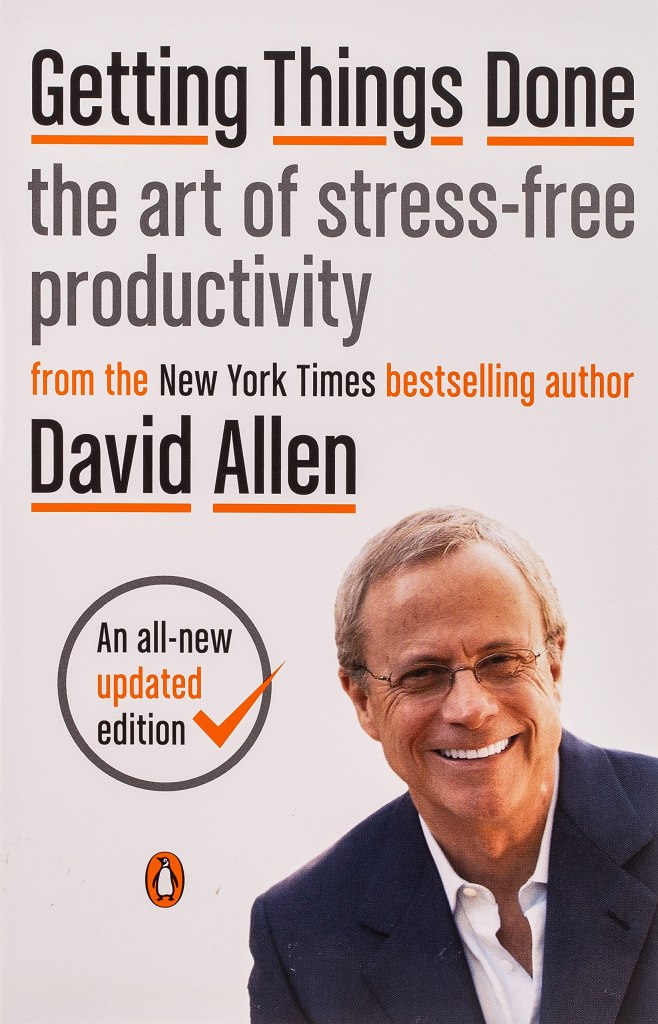
The GTD methodology has been out in the world for over 25 years. Millions of people have used it to better organize their work and get more done. However, one challenge people often face is being the only person in their office applying GTD. It can be hard to keep up a successful system when everyone else is doing their work less productively. Aside from trying to get everyone to commit to it personally, can it be scaled to teams?

David Allen and co-writer Edward Lamont believe that it can, with their new book, Team: Getting Things Done with Others. As shared on the book jacket:

By building on the effectiveness of what GTD does for individuals, Team will offer a better way of working in an organization, while simultaneously nourishing a culture that allows individuals’ skills to flourish. Using case studies from some of the world’s largest and most successful companies, Team shows how leaders have employed the principles of team productivity to improve communication, enable effective execution, and reduce stress on team members. These principles are increasingly important in the post-pandemic workplace, where the very nature of how people work together has changed so dramatically.

Over the next few months, I will share teachings from Team. Today I’ll start with a tease of their discussion of moving from one person to a group, which involves a different approach to work.

At a team level, we see the equivalent of “mind like water” to be something we’ve come to describe as “healthy high performance.” This is a way of working together that is not just able to keep pace with, or outrun, the competition, but to do it in a way that is sustainable – fun, even – over the longer term.

With this approach they are aiming to share ways for teams to be successful both in terms of their work goals and also to be healthy in mind, body, and spirit. Stay tuned over the next few months to learn the specific techniques to achieve it.

If you don’t want to wait, get your copy of Team: Getting Things Done with Others and read ahead.

How to Organize a Shared Workspace

As a fan of GTD, I have been able to organize my personal workspace to match my work style. Having a private office helps me keep control. However, many office workers are stuck in shared workspace situations. While they can control their own immediate spot, the common areas seem to be an unruly land. Is it possible to organize a shared workspace?

Francesca Stracuzzi recently mapped out a way to do so in five steps on the KonMari website. The first step is to take stock of your office’s current state.

“Many desks are overloaded, and both paper and digital archives are not functional, making it difficult to find documents and files,” she says. “A messy and disorganized desk generates stress, anxiety and demotivation, and, in the midst of that chaos, it also reduces our ability to make decisions. I am convinced that space affects our emotions and conditions our performance, so freeing the desk means lightening the mind and working with more serenity and clarity.”

Photo by Marc Mueller on Pexels.com

The next step is to get support from leadership.

“In my work experience, I have seen that the management of space, particularly offices and desks, is left to individual workers,” says Francesca. This may seem logical, but it often leads to a snowball effect, wherein one messy desk turns into many. 

Instead, Francesca recommends encouraging a different perspective within the team, including management, that focuses on how getting organized can benefit the whole team.

By framing the idea of a team organization project to leadership this way, you’ll have an easier time getting them to sign off on the project.  

To learn more about the steps to organizing a shared workspace, including the final three steps, please visit the KonMari website.